01
Animal welfare
01
Animal welfare
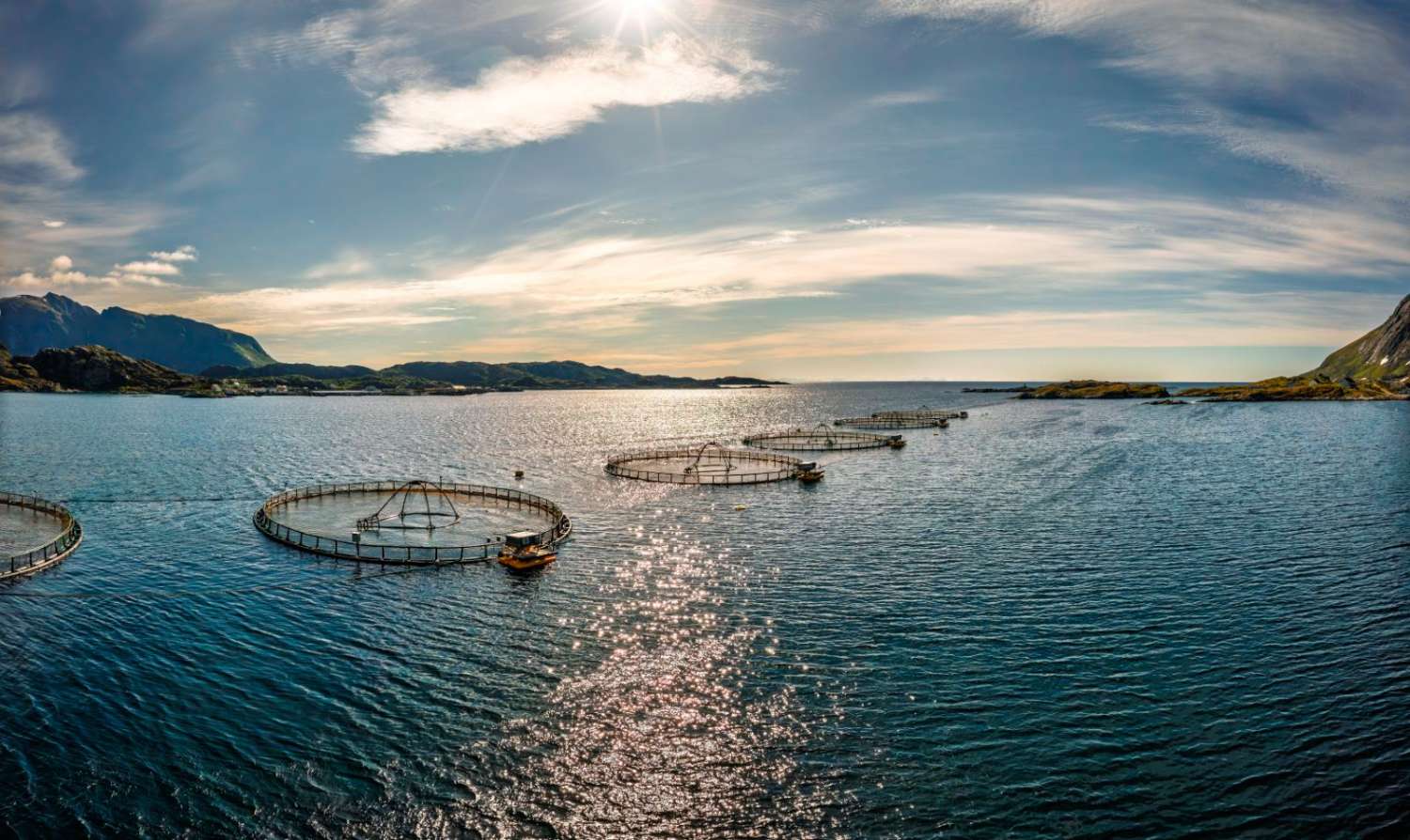
Healthier fish, lower mortality and stronger biosecurity through better cage environments, monitoring and breeding.
Through Nordic Aquaculture Solutions — Scalable for Global Impact
Land alone cannot feed the future. The next era of protein production must come from the sea.
The world needs more food, produced with lower emissions, lower resource use and less pressure on land-based systems. Seafood, and especially aquaculture, is one of the few scalable solutions capable of meeting that challenge. However, scaling the industry requires solving its most critical challenges first.
Food production accounts for nearly 30 % of global greenhouse gas emissions, while demand for food is expected to increase by 60 % by 2050. Yet the ocean, covering 70 % of the planet, contributes just 6 % of global protein supply.
Of global emissions come from food production.
Projected increase in food demand by 2050.
Of global protein supply comes from the ocean.
Shifting from land-based proteins to ocean-based production is not just necessary, it is one of the most effective ways to reduce emissions and increase food supply simultaneously.
Wild fisheries alone cannot meet future demand. Global wild fish stocks have natural biological limits and cannot scale fast enough to feed a growing population. Future growth in seafood production must therefore come from aquaculture.
Aquaculture is uniquely positioned to help fill the global protein gap. The key challenge is how to scale seafood production responsibly, through better technologies, better operations and better farming practices. That is where we invest.
 Farmed salmon Farmed salmon |
 Poultry Poultry |
 Pork Pork |
 Cattle Cattle |
|
|---|---|---|---|---|
| Carbon footprintkg CO₂e / kg edible product | 5.1 | 8.4 | 12.2 | 39 |
| Water consumptionliter / kg edible product | 2,000 | 4,300 | 6,000 | 15,400 |
| Land usem² land / kg edible product | 8.4 | 12.2 | 17.4 | 326 |
| Edible meatkg per 100 kg feed | 56 | 39 | 19 | 7 |
| Omega-3 fatty acidsper 100 g of edible product | 1.96 | 0.03 | 0.01 | 0.00 |
Norway has developed the world's most industrialized aquaculture value chain. Today, the country accounts for around 50 % of global salmon production, built on decades of technological development, biological understanding and operational excellence.
The salmon industry has become both industrialized and profitable, creating a foundation for continuous innovation. Technologies, services and operational models developed within salmon farming are now being applied beyond this one species. This is what makes salmon unique. It is not just a product, but a platform for innovation that can be scaled globally.
Bluefront invests in profitable companies with proven technologies already delivering commercial value and measurable impact. Our strategy focuses on scaling companies solving critical industry challenges related to fish welfare, ocean health, resource efficiency and operational control.
These challenges must be solved for the industry to scale. At the same time, solving them improves productivity, reduces risk and increases profitability. This is what we like to call the “double win”; better impact leads to better economics.
Bluefront invests:
In businesses within the seafood industry:
The companies measure:
Which contribute to:
The enabling impact of our portfolio
ImpactHealthier fish, lower mortality and stronger biosecurity through better cage environments, monitoring and breeding.
Protecting the marine environment around farming sites — biodiversity, seabed quality and the wider ecosystem.
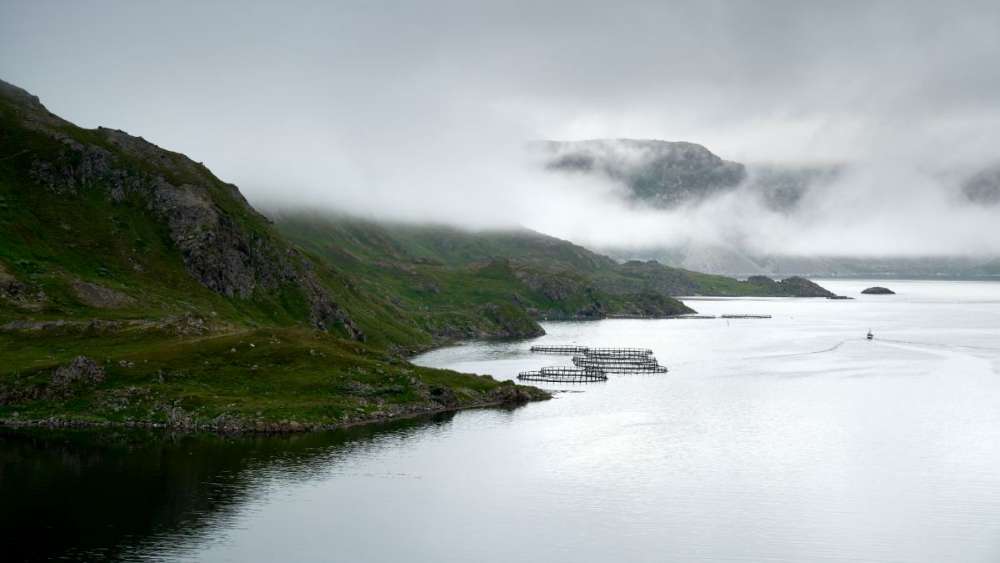
Cleaner water and lower chemical load through hygiene systems, water treatment and on-site oxygen production.
Lower-emission infrastructure across the value chain — natural refrigerants, smarter feeding, less transport.
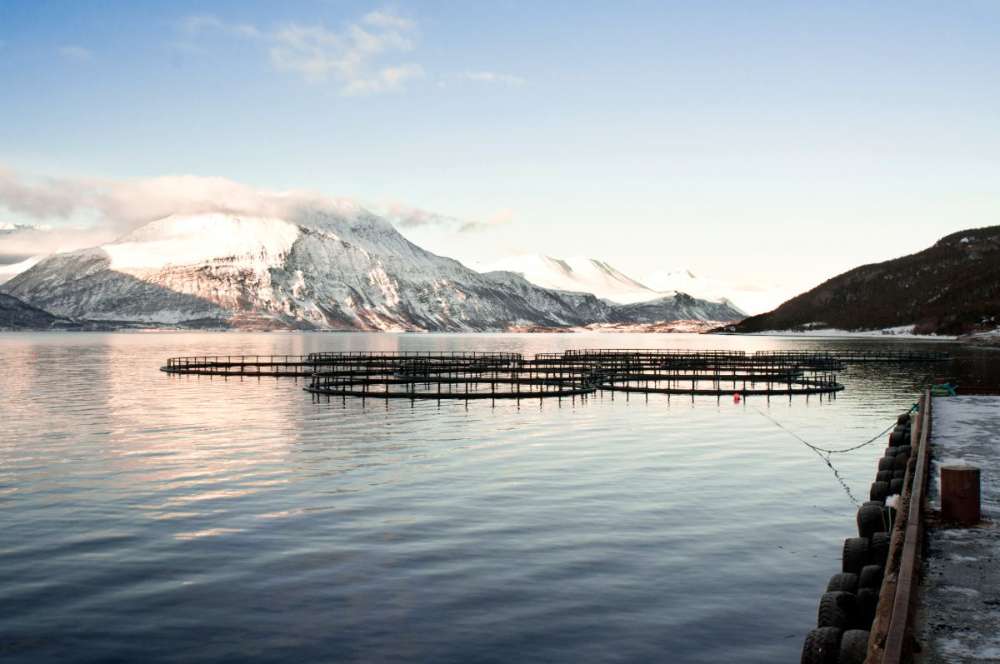
Digital tools, traceability and decision support that raise standards from broodstock to processing.
To scale responsibly, aquaculture must solve a set of fundamental operational and environmental challenges. At Bluefront, the strategy is built around two fundamental challenges: improving fish welfare and protecting ocean health. Every investment is a response to these challenges.

Scaling aquaculture responsibly requires better technologies, better operations and better infrastructure.
Each company in the Bluefront portfolio addresses a critical challenge limiting the future growth of aquaculture. Together, they represent Bluefront's core thesis: that proven Nordic solutions can scale sustainable aquaculture globally.
Click any row to expand the full challenge, solution and impact profile.
The future of aquaculture will not be built on unproven ideas alone. It will be built by scaling technologies, services and operational models that already work.
Bluefront invests in companies enabling that transition, companies improving fish welfare, ocean health, operational efficiency and resource use. We do so because the challenges they address are not local. They are global.
The Nordic aquaculture industry has already proven that aquaculture can scale. The next step is scaling these solutions globally.